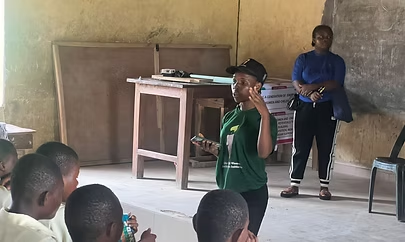
Menstrual Hygiene and Teenage Pregnancy Awareness Campaign
Menstrual Hygiene management and reproductive health education are fundamental components of comprehensive health promotion, particularly in educational settings where young people are most receptive to learning. This intervention seeks to bridge seeks to bridge knowledge gaps and provide practical support to students while fostering an environment where health topics can be discussed openly and without stigma. The outreach program builds on our commitment to ensuring women and children have access to relevant information that empowers them to make informed decisions about their health, safety, and wellbeing.
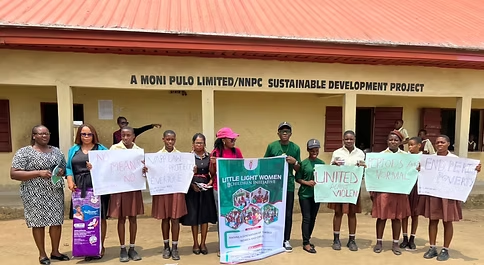
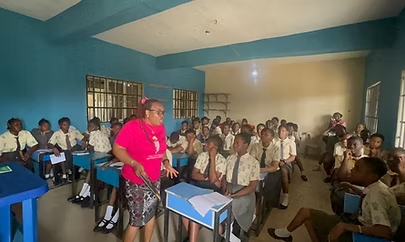
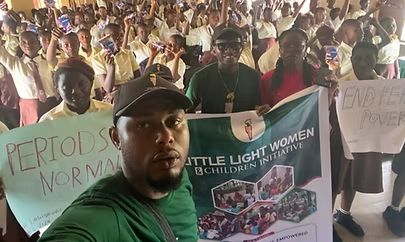
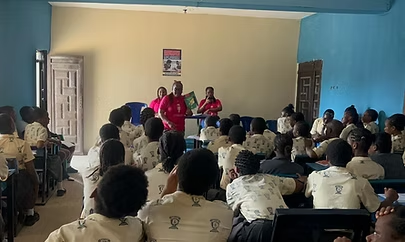
Little Light Women and Children Initiative, in strategic partnership with [G-FLEN], conducted Menstrual Hygiene and Teenage Pregnancy Awareness Campaign at Comprehensive high school, Idu Uruan, Akwa Ibom State and Diplomat High School, Idoro on June 23,2025 and June 26,2025 respectively. The outreach program was attended by students from various class arms, school administrators, teachers, and representatives from both partner organizations. The program featured interactive sessions led by facilitators from both organizations. LLWCI’s Program Manager handled the session on menstrual hygiene while the G-FLEN state representative facilitated the teenage pregnancy awareness session. The sessions were designed to be age-appropriate, encouraging active participation and open dialogue among students. The program utilized age-appropriate presentation methods, practical demonstrations, and open discussion sessions to ensure effective knowledge transfer. Participating students received practical support in the form of sanitary pads. Throughout both sessions, students demonstrated exceptional engagement, actively participating in discussions and asking pertinent questions that reflected their genuine interest in learning about these important health topics.
Key results achieved: Successfully reached 350 students with comprehensive menstrual hygiene and reproductive health education, through interactive learning and practical demonstrations. We provided practical support through distribution of 450 sanitary pads [350 to students, 50 to each school for emergencies].